Introducing Farm Club: Grow Your Own Food at Oceanside Organics
At Oceanside Organics, we’ve always believed that growing food is about more than just vegetables. It’s about connection—to the soil, to the seasons, and to the community around us.
This spring, we’re excited to introduce something new at the farm: Farm Club, a community garden membership designed to help people learn how to grow their own organic food while becoming part of a working regenerative farm.
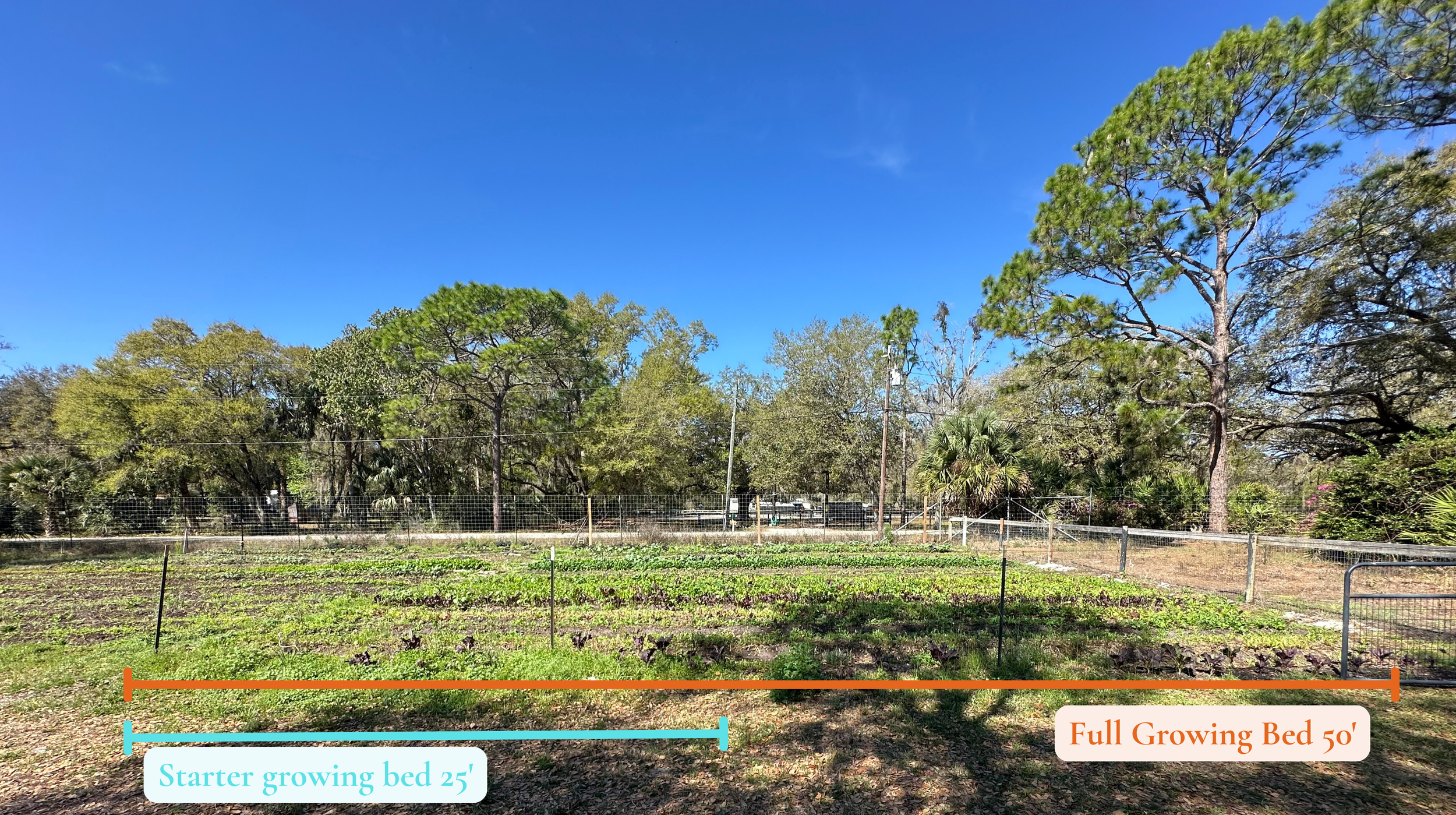
Farm Club was created for people who want to grow their own vegetables but may not have the space, time, or experience to start a garden at home. Instead of figuring it out alone, members receive their own garden bed here at Oceanside Organics along with guidance and support throughout the growing season.
Whether you’re brand new to gardening or simply want a place to reconnect with the land, Farm Club offers a hands-on way to learn, grow, and become part of a farm community.
A Farm Built on Regenerative Principles
Oceanside Organics is a small regenerative farm in New Smyrna Beach dedicated to building healthy soil and producing nutrient-dense food using organic and ecological practices.
Regenerative farming focuses on restoring soil health, supporting biodiversity, and working with natural systems rather than against them. This means we prioritize practices like composting, building living soil, minimizing chemical inputs, and creating a farm ecosystem that supports pollinators, wildlife, and resilient crops.
Farm Club members get to experience these practices firsthand—not just by learning about them, but by participating in the process of growing food in a regenerative system.
Recovering From a Challenging Season
This past winter brought an unexpected challenge to our farm. A severe frost swept through the area and damaged many of the crops we had been growing.
For farmers, weather events like this are always a reminder of how closely our work is tied to the natural world. Farming requires patience, resilience, and a willingness to begin again when nature throws us a curveball.
While the frost set us back, it also created an opportunity.
Instead of simply rebuilding behind the scenes, we decided to invite our community into the process.
Farm Club is part of that vision.
Rather than just growing food for people, we want to grow food with people.
Co-Creating the Future of the Farm
Because Farm Club is just beginning, members who join now will be part of shaping what this program becomes.
Early members will have the opportunity to co-create the experience alongside us as we continue rebuilding the farm after the frost and preparing for the seasons ahead.
That might include:
Deciding what vegetables to grow
Experimenting with new varieties
Learning regenerative techniques together
Building community around growing food
Gardens are living systems that evolve over time, and the same is true for Farm Club. By joining early, members become part of the story of how this community garden grows.
What Farm Club Members Receive
Farm Club membership includes:
Your own organic garden bed
Members receive their own space at the farm to grow vegetables, herbs, and flowers.
Weekly guidance and support
We provide ongoing guidance on organic gardening, seasonal planting, soil health, and regenerative techniques.
No daily watering required
The farm manages irrigation, so members can enjoy gardening without the burden of daily maintenance.
Hands-on learning
Members learn how to grow food in a real farm environment using sustainable practices.
Community connection
Farm Club is designed to bring people together around a shared interest in healthy food, nature, and sustainability.
Designed for Beginners
One of the most common things we hear from people is:
“I’ve always wanted to grow my own food, but I don’t know where to start.”
Farm Club was designed specifically with beginners in mind.
Instead of navigating gardening on your own, members have a place to learn, ask questions, and build confidence as growers.
Even if you’ve never planted a seed before, you’ll have the support you need to get started.
Why Growing Your Own Food Matters
Growing food changes the way we relate to what we eat.
When you plant a seed, watch it grow, and harvest it yourself, vegetables stop being something you simply buy at the store. They become part of a relationship with the land and the seasons.
Many people also find that gardening offers unexpected benefits:
Spending time outdoors
Reducing stress
Connecting with nature
Eating fresher, more nutrient-dense food
Learning skills that last a lifetime
In a world that often moves quickly and feels disconnected from nature, gardening can be a powerful way to slow down and reconnect.
An Exclusive Discount for Early Members
Because Farm Club is just getting started, we’re offering an exclusive discount for early members who want to join during this foundational stage.
These early members will not only receive discounted access to the program, but will also help shape the future of Farm Club as we grow together.
If you’ve been curious about gardening or interested in becoming more connected to your food, this is a wonderful time to join.
Join Us at the Farm
We believe that farms thrive when they are rooted in community.
Farm Club is our invitation to open the gates and welcome more people into the experience of growing food, learning from the land, and building something meaningful together.
As we recover from the winter frost and begin planting for the seasons ahead, we’re excited to invite new members to be part of this next chapter at Oceanside Organics.
If you’d like to learn more about Farm Club or become a member, you can visit:
https://oceansideorganics.net/farm-club-membership
We look forward to growing with you.
🌱
Why Local Food Tastes Better (and Lasts Longer)
Local food doesn’t just taste better — it lasts longer, too. When produce is harvested at peak ripeness and grown in healthy soil, flavor, freshness, and nutrition all shine through.
If you’ve ever brought home produce from a farmers market and thought, “Why does this taste so much better than the grocery store?” — you’re not imagining things. Local food truly does taste better, and as a bonus, it often lasts longer in your fridge too.
At Oceanside Organics, we hear this all the time — especially about our fresh arugula, which customers are often surprised is not bitter, limp, or slimy after a couple of days. The reason comes down to time, biology, and how food is grown and handled.
Let’s break down why local food has the edge.
1. Local Food Is Harvested at Peak Ripeness
One of the biggest differences between local food and grocery store food is when it’s harvested.
Most large-scale produce is picked early, before it’s fully mature. This allows it to survive:
Long-distance shipping
Warehousing
Distribution centers
Store shelves
The problem? Flavor develops last.
When greens like arugula are harvested prematurely, they miss out on the final stage of flavor development — the point where sugars, oils, and aromatic compounds fully form.
Local farms don’t have to play that game.
Because we sell directly to our community, we can harvest at peak maturity, often the same day or the day before you buy it. That’s why local arugula has:
A brighter, peppery flavor
Tender (not tough) leaves
A clean, fresh finish instead of bitterness
Freshness isn’t just about convenience — it’s about chemistry.
2. Time Is the Enemy of Flavor (and Nutrition)
The moment a plant is harvested, it starts to lose:
Moisture
Flavor compounds
Nutrients
Leafy greens are especially vulnerable. Studies show that greens can lose a significant portion of their vitamin content within days of harvest — even under refrigeration.
Now consider the typical grocery store journey:
Harvested days (or weeks) before sale
Trucked across states or countries
Stored in cold warehouses
Displayed under bright lights
By the time it reaches your kitchen, that arugula may already be tired.
Local food skips most of that timeline.
When you buy local arugula, you’re often eating it within 24–72 hours of harvest, meaning:
Better flavor
Better texture
Better nutrition
That’s not marketing — it’s biology.
3. Local Food Is Grown for Taste, Not Transport
Large-scale agriculture prioritizes traits like:
Uniform size
Thick skins
Long shelf life
Ability to withstand shipping
Flavor is often secondary.
Small regenerative farms can prioritize something different: taste.
Our arugula is grown slowly in healthy, living soil — not pushed with synthetic fertilizers to grow fast and big. Slower growth allows plants to develop:
More complex flavors
Stronger cell structure
Natural pest resistance
This is why our arugula holds up so well in your fridge. Stronger plants create stronger leaves.
4. Healthy Soil Creates Better-Tasting Food
Here’s a secret most people don’t hear about often enough: soil health directly affects flavor.
At Oceanside Organics, we focus on regenerative practices that build:
Microbial life
Organic matter
Mineral-rich soil
Plants grown in biologically active soil have access to a wider range of nutrients, which directly impacts:
Flavor depth
Aroma
Nutrient density
Arugula grown in depleted soil tends to taste harsh or flat. Arugula grown in healthy soil has a balanced peppery bite that pairs beautifully with:
Citrus
Olive oil
Balsamic vinegar
Soft cheeses
(Yes — this is your sign to make another salad.)
5. Local Food Lasts Longer Because It’s Fresher and Stronger
People are often surprised when they tell us:
“Your arugula lasted all week — sometimes longer!”
This happens for two reasons:
1. It’s fresher when you buy it
Less time between harvest and your fridge means less moisture loss and cellular breakdown.
2. It wasn’t bred to be fragile
Greens grown slowly in healthy soil develop thicker cell walls, which helps them:
Resist wilting
Stay crisp
Avoid slimy breakdown
Pro tip: Store arugula loosely wrapped in a breathable bag or container with a dry paper towel. Don’t wash until you’re ready to use it.
6. Why Arugula Is the Perfect Example of Local Food Done Right
Arugula is one of those crops that really exposes the difference between local and industrial food.
When it’s old, arugula can be:
Overly bitter
Limp
Slimy
Hard to use up
When it’s fresh and local, arugula is:
Bright and peppery
Tender
Versatile
Easy to eat daily
Some of our favorite ways customers use our arugula:
Tossed with olive oil, lemon, and salt
Mixed into eggs or omelets
Layered onto sandwiches
Blended into pesto
Added to pasta at the very end of cooking
If you’ve struggled to love arugula before, chances are you just hadn’t had it fresh enough.
7. Buying Local Supports a Better Food System
Beyond flavor and shelf life, buying local food supports:
Small farms
Your local economy
Farming practices that prioritize soil and ecosystems
When you buy a bag of local arugula, you’re not just buying greens — you’re investing in:
Healthier land
More resilient farms
A stronger local food system
Taste the Difference for Yourself
If you’re curious whether local food really makes a difference, arugula is a great place to start.
Our freshly harvested arugula is available through Oceanside Organics and is grown with care, harvested at peak flavor, and handled as little as possible — so it tastes the way arugula should.
Once you experience the difference, it’s hard to go back.
Fresh. Local. Regenerative. And yes — delicious.